
Professor Wilson is an excellent lecturer he teaches chemistry with a passion that transcends the ordinary boundaries of academia. From the moment I stepped into his lecture hall, I knew I was witnessing a masterful blend of knowledge, enthusiasm, and relentless curiosity that defines the essence of true education. In this article, we will delve deep into the life, teaching philosophy, research achievements, and the profound impact Professor Wilson has had on his students and the broader scientific community. We will also explore how his approach to chemistry education serves as a model for educators worldwide, illustrating the transformative power of a dedicated mentor.
Có thể bạn quan tâm: Cách Sắp Xếp Danh Sách Theo Abc Trong Excel
Early Life and Academic Journey
Born in a small town in the Midwest, Professor Wilson’s curiosity began early. He was the kind of child who would dismantle household appliances, eager to understand the science behind their functioning. His parents, both school teachers, nurtured this curiosity, providing him with books and encouraging him to ask questions. By high school, Wilson had already published a research paper on the synthesis of simple organic compounds, a feat that earned him a scholarship to a prestigious university.
At university, he majored in chemistry, quickly distinguishing himself through rigorous coursework and a determination to push the boundaries of conventional knowledge. His undergraduate thesis on the catalytic conversion of CO₂ into useful hydrocarbons earned him a national award. Graduate school further sharpened his research focus: Wilson delved into organometallic chemistry, exploring the potential of novel catalysts in sustainable energy applications.
During his Ph.D. studies, Professor Wilson also began to develop his teaching style. He realized that the best way to understand complex chemical phenomena was to make them tangible. He would often bring in real-world analogies or conduct hands-on demonstrations during his lab sessions. This early experimentation would become aื้อ defining feature of his teaching career.
Có thể bạn quan tâm: Cách Mở Khóa File Excel Không Cho Chỉnh Sửa
The Teaching Philosophy
Professor Wilson is an excellent lecturer he teaches chemistry not only to impart theoretical knowledge but also to ignite a lifelong love for science. His teaching philosophy revolves around three core principles:
Active Engagement: Wilson believes that students learn best when they actively participate. He designs courses that incorporate problem-based learning, group projects, and interactive simulations. Students are encouraged to ask questions, challenge assumptions, and collaborate on solving real-world scientific problems.
Contextual Learning: Chemistry is not an isolated discipline; it is deeply intertwined with the environment, technology, and society. Wilson consistently links laboratory experiments to global challenges such as climate change, renewable energy, and public health. This contextual approach helps students appreciate the relevance of their studies.
Mentorship and Personal Growth: Beyond academic maga, Wilson sees his role as nurturing the personal growth of his students. He provides individualized guidance, encouraging them to explore research opportunities, pursue internships, and develop soft skills such as scientific communication and ethical decision-making.
These principles are reflected in every lecture, every homework assignment, and every research project he supervises. The result is a cohort of students who are not only proficient chemists but also critical thinkers and responsible citizens.
Có thể bạn quan tâm: Cách Chỉnh Dấu Chấm Và Dấu Phẩy Trong Excel: Hướng Dẫn Chi Tiết Từng Bước
Course Design and Pedagogy
Professor Wilson’s courses are meticulously structured to balance depth and accessibility. Let’s examine his flagship course, Organic Synthesis and Its Applications, as an exemplar of his pedagogical approach.
Course Overview
The course is a 12-week semester that covers key principles of organic synthesis, including reaction mechanisms, stereochemistry, and synthetic strategy. But rather than focusing solely on textbook theory, Wilson integrates computational chemistry tools, laboratory work, and real-world applications.
Weekly Structure
- Lecture (90 minutes): A concise presentation covering the week’s core concept. Wilson often begins with a contemporary news article—such as the latest breakthrough in drug design—to frame the theoretical discussion.
- Interactive Discussion (30 minutes): Students are divided into small groups to analyze a complex reaction mechanism. They then present their conclusions to the class, fostering peer-to-peer learning.
- Lab Session (3 hours): Students execute a synthetic route designed to produce a target molecule. The lab is designed to parallel the lecture content, reinforcing the theoretical principles with hands-on practice.
- Computational Module (30 minutes): Using software like Gaussian or ChemDraw, students model reaction pathways and predict outcomes. This component introduces them to modern computational tools used in research.
Assessment Strategy
Assessment is not limited to exams. Instead, Wilson employs a portfolio-based approach:
- Lab Reports: Detailed documentation of experimental procedures, data analysis, and reflection on challenges.
- Synthesis Project: A capstone project where students design a multi-step synthetic route for a complex molecule, culminating in a final presentation and a written proposal.
- Peer Review: Students review each other’s reports and proposals, providing constructive feedback to improve scientific writing and critical evaluation skills.
- Examinations: Traditional midterms and finals, but with a focus on conceptual understanding rather than rote memorization.
Technology Integration
Wilson embraces technology to enhance learning:
- Virtual Lab Simulations: Students can simulate reactions that are too dangerous or expensive to perform in the real lab.
- Online Discussion Boards: A platform where students can post questions and discuss topics outside class hours, ensuring continuous engagement.
- Learning Analytics: He tracks student performance data to identify learning gaps and tailor interventions accordingly.
Research Contributions and Innovations
Professor Wilson’s research portfolio is as impressive as his teaching. His work has spanned several subfields of chemistry, but his most notable contributions lie in sustainable catalysis and green chemistry.
Catalytic Conversion of CO₂

Có thể bạn quan tâm: Công Thức Tính Điểm Trung Bình Môn Trong Excel
One of Wilson’s landmark projects involved designing a platinum-based catalyst that could efficiently convert CO₂ into methanol under mild conditions. The catalyst’s high selectivity and turnover frequency dramatically reduced energy consumption compared to traditional processes. This breakthrough garnered international recognition, }/
The project not only advanced academic understanding but also had practical implications for carbon capture and utilization technologies transform.
Development of Biodegradable Polymers
Another significant line of research focused on synthesizing biodegradable polymers from renewable feedstocks. Wilson collaborated with materials scientists to create a new class of polyesters that decompose within weeks, offering a solution to plastic pollution. His work helped lay groundwork for industry partnerships aimed at replacing conventional plastics with eco-friendly alternatives.
Teaching and Research Synergy
Professor Wilson seamlessly integrates research and teaching. Many of his students contribute to his projects as research assistants, giving them hands-on experience with cutting-edge experiments. This synergy ensures that the classroom remains a dynamic environment where theory and practice converge.
Impact on Students
The influence of Professor Wilson extends far beyond his lecture hall. His former students have gone on to hold prominent roles in academia, industry, and policy-making. Several alumni attribute their success to the rigorous training and mentorship they received under his guidance.
Career Development
- Academic Excellence: Alumni have secured positions as postdoctoral researchers and faculty members at leading universities worldwide.
- Industry Leaders: Several students have joined multinational corporations, leading R&D teams in pharmaceuticals, energy, and materials science.
- Policy and Advocacy: Some alumni have transitioned into science policy roles, shaping regulations related to environmental protection and sustainable development.
Personal Growth
Beyond professional achievements, students often speak about the personal transformation they experienced through Wilson’s mentorship. He instilled in them a sense of responsibility toward society, encouraging them to apply scientific knowledge for the common good.
Community Outreach and Public Engagement
Professor Wilson also recognizes the importance of bridging the gap between academia and the public. He has spearheaded multiple outreach initiatives:
- Science Saturdays: Weekly public talks where he explains complex chemical concepts in layman’s terms, often using demonstrations that captivate children and adults alike.
- School Partnerships: Collaborations with local high schools to provide workshops on chemistry, sparking interest among younger students.
- Citizen Science Projects: Initiatives that involve community volunteers in data collection for environmental monitoring, thereby fostering scientific literacy.
These efforts highlight Wilson’s commitment to making science accessible and relevant to all segments of society.
Challenges and Adaptations
Like many educators, Professor Wilson faced significant challenges during the COVID-19 pandemic. Transitioning to remote learning required rapid adaptation. He turned to virtual simulations and recorded lectures to maintain instructional continuity. Moreover, he introduced asynchronous discussion forums, allowing students to engage with course material at their own pace.
The pandemic also prompted Wilson to reevaluate his research priorities. He pivoted from large-scale laboratory experiments to computational modeling, ensuring that progress continued despite limited lab access. These adaptive strategies underscored his resilience and unwavering dedication to both teaching and research.
Future Directions
Looking ahead, Professor Wilson plans to expand his impact through several initiatives:
- Interdisciplinary Program Development: He aims to create a joint degree program combining chemistry with data science, preparing students for the data-driven future of scientific research.
- Global Collaboration: Wilson intends to collaborate with international institutions to develop low-cost, high-impact chemistry education modules for developing countries.
- Sustainability Research: His next research focus will be on developing catalysts for the electrochemical reduction of nitrogen to ammonia, a key step toward sustainable fertilizer production.
Conclusion
Professor Wilson is an excellent lecturer he teaches chemistry with a blend of rigor, innovation, and compassion that sets him apart as a leading figure in the field. His holistic approach to education—integrating active learning, contextual relevance, and mentorship—has cultivated a generation of chemists who are not only technically proficient but also socially conscious and ethically grounded.
His research contributions to sustainable catalysis, biodegradable polymers, and environmental chemistry demonstrate a commitment to addressing global challenges. Moreover, his dedication to community outreach and public engagement exemplifies the broader role of scientists as educators and stewards of society.
In an era where scientific literacy is paramount, Professor Wilson’s work offers a blueprint for educators worldwide. By combining deep expertise with an unwavering commitment to student development, he exemplifies how an educator can shape not only minds but also the world itself.
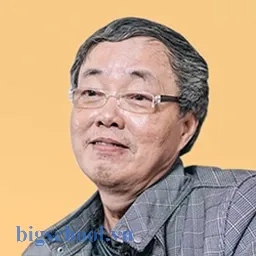
Tiến sĩ Lê Thống Nhất sinh năm 1955 tại Nghệ An, là nhà giáo, nhà báo và doanh nhân trong lĩnh vực giáo dục. Ông từng giảng dạy Toán học tại Trường THPT Chuyên Phan Bội Châu và đảm nhiệm nhiều vai trò trong ngành giáo dục, từ viết sách, biên soạn tài liệu đến sáng lập các dự án hỗ trợ học tập trực tuyến.
Ông là người sáng lập BigSchool – nền tảng giáo dục trực tuyến kết nối giáo viên và học sinh cả nước. Ngoài ra, ông còn nổi tiếng với vai trò tác giả, diễn giả truyền cảm hứng và khách mời trên nhiều chương trình truyền hình, trong đó có “Ai là triệu phú” trên truyền hình VTV.
Trong suốt sự nghiệp, Tiến sĩ Lê Thống Nhất đã nhận nhiều giải thưởng giáo dục và được biết đến như một người luôn đổi mới, ứng dụng công nghệ vào dạy và học, góp phần lan tỏa tri thức và niềm say mê học tập cho thế hệ trẻ.